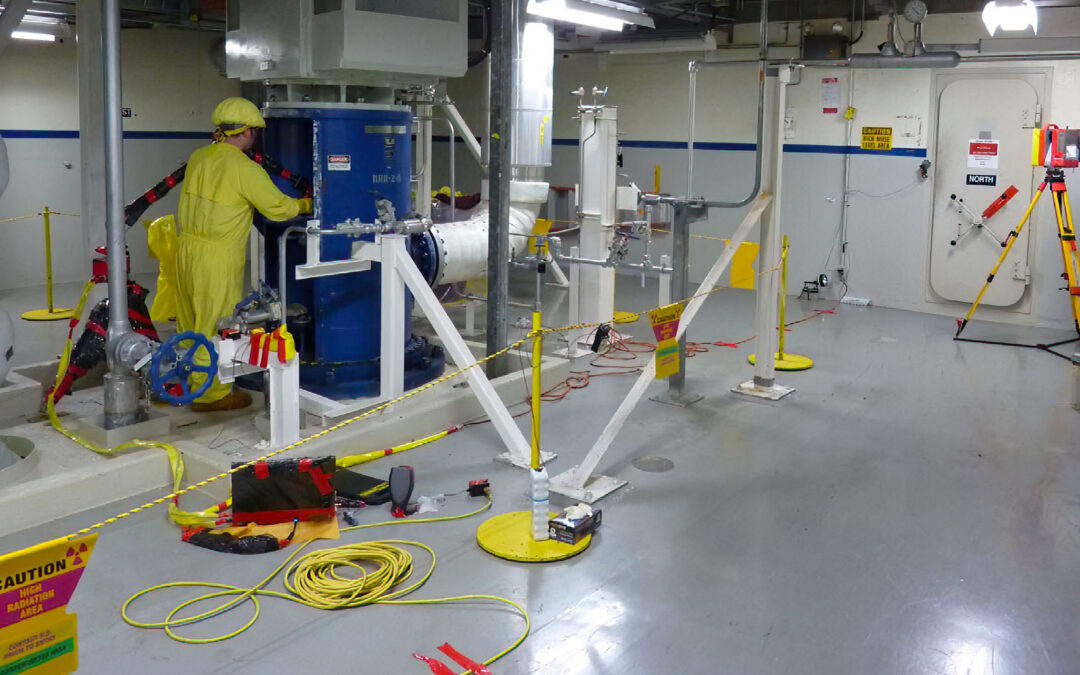
Recommissioning nuclear facilities is a coordinated execution challenge. Dimensional uncertainty directly impacts machining accuracy, alignment integrity, and system readiness. Reliable field data must drive every corrective action.
OASIS integrates long range 3D scanning with on site precision machining and alignment services to support recommissioning projects where accuracy and schedule control are critical. By documenting assets in their current state and acting on verified geometry, projects move forward with greater control and reduced risk.
Accurate Data and Controlled Execution When It Matters Most
Nuclear recommissioning is not the time for assumptions. Systems that have been offline for extended periods often deviate from drawings, prior baselines, and historical records. Geometry shifts. Interfaces change. Access constraints evolve. The margin for error is minimal.
Successful recommissioning depends on two things. Knowing exactly what exists in the field and executing corrective work with precision. This is where long range 3D scanning and on-site machining work best as a single, coordinated effort.

Capturing True As-Built Conditions Before Work Begins
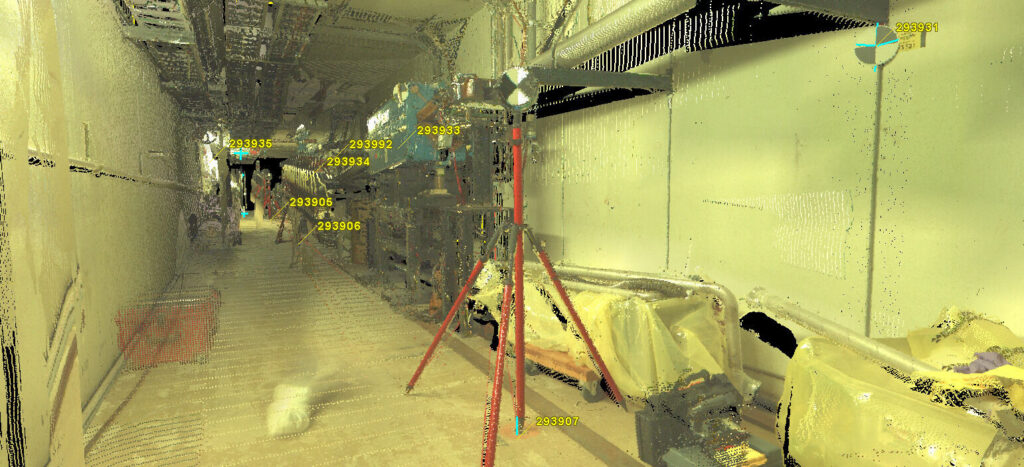
Long range 3D scanning provides a complete and accurate representation of current plant conditions. Unlike legacy drawings or partial measurements, scanning captures geometry, spatial relationships, and clearances across large and complex environments.
In addition, 3D scanning provides extremely accurate dimensional documentation of all assets in their current state. This establishes a reliable digital record that engineering, maintenance, and regulatory teams can reference throughout the recommissioning process.
For recommissioning projects, this data is used to:
- Verify equipment positions and elevations
- Identify accumulated movement or distortion
- Confirm access paths and work envelopes
- Detect interferences before crews mobilize
This establishes a verified baseline that machining teams can trust.

Translating Scan Data Directly Into Machining Execution
When scanning and machining teams operate independently, valuable context is often lost. When they work together, scan data becomes an execution tool.
Scan data is used to:
- Define machining reference frames
- Validate cut locations and tolerances
- Confirm equipment interfaces before metal is removed
- Reduce field adjustments during critical path work
Machining crews enter the plant with clear intent, validated dimensions, and fewer unknowns. This shortens setup time and reduces risk during live execution.
Reducing Rework and Schedule Risk During Recommissioning
Recommissioning schedules are compressed. Any delay has cascading effects across testing, validation, and regulatory milestones.
A single team approach reduces risk by:
- Eliminating conflicting datasets between vendors
- Aligning measurement methods across disciplines
- Preventing fit up issues discovered after machining begins
- Allowing real time verification during execution
When scan data, machining, and verification are aligned, issues are addressed before they impact startup.
Supporting Verification and Readiness for Return to Service
After machining work is complete, the same scanning and measurement technologies are used to confirm final conditions.
This supports:
- Post work verification against required geometry
- Documentation for engineering and regulatory review
- Confidence that systems are ready for recommissioning activities
Using one coordinated team ensures consistency from initial data capture through final validation.
Why One Team Matters in High Stakes Nuclear Work
Recommissioning is not a collection of isolated tasks. It is a sequence of tightly linked decisions and actions. Fragmented responsibility increases risk.
A unified scanning and machining team provides:
- One source of truth for dimensional data
- Direct communication between data capture and execution
- Faster response to field conditions
- Greater accountability for outcomes
Recommissioning demands accuracy, coordination, and discipline. Long range 3D scanning defines reality. Precision machining acts on it. When both are delivered by one integrated team, nuclear facilities reduce uncertainty, control risk, and move toward safe return to service with confidence.
When scanning, machining, and alignment are managed under one team, data does not get lost between disciplines. Execution becomes more efficient, and verification is built into the process.
OASIS supports nuclear facilities with integrated field services designed to reduce uncertainty and improve restart confidence during recommissioning activities.
For coordinated scanning and machining support, connect with our field service team today.